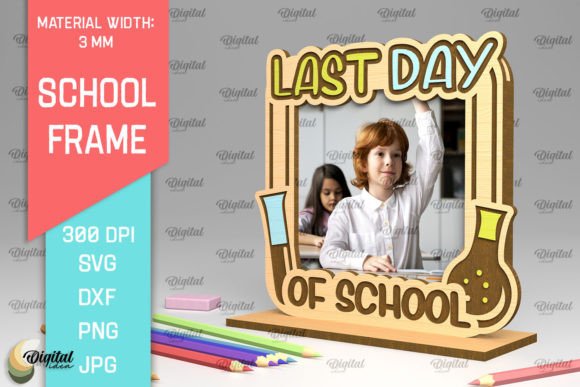
A Laser Cut Wooden Frame Design for Your Embroidery Projects
As someone who stitches for clients, for my small shop, and for my own creative satisfaction, I’m always looking at new designs with a practical eye. How will this actually look on fabric? What kind of project does it truly belong to? The School Wooden Photo Frame Laser Cut design immediately struck me as a piece with a specific, charming mood. It’s not just a generic shape; it carries a nostalgic, crafted personality.
The Personality of This Design: Vintage Charm with Modern Use
My first impression was one of structured whimsy. The laser cut theme implies clean, sharp outlines, which translates beautifully into embroidery as crisp satin stitch borders or precise running stitch details. The “school” and “wooden frame” concept creates a mood of warmth and memory. This isn’t a flashy, modern graphic. It feels personal, thoughtful, and slightly vintage. Visually, it belongs on projects meant to hold sentiment—a perfect frame for a name, a date, or a small embroidered portrait.
The layout suggests a central focus area, naturally inviting customization. For an embroidery designer, that’s a valuable starting point. I pictured it immediately on a keepsake pillow for a teacher, or as a decorative element on a baby blanket with a child’s name embroidered inside the “frame.” Its detail level seems manageable—not overwhelmingly dense, but with enough character to stand out as a finished product.
Where This Design Shines in Real Embroidery Work
Let’s walk through a real scenario. I’m preparing a custom order for a client who wants a personalized tote bag as a graduation gift. They want the graduate’s name and the year incorporated. This School Wooden Photo Frame Laser Cut design could serve as a perfect anchor. I could stitch the frame itself onto the tote bag fabric, perhaps using a rich brown thread to mimic the “wooden” feel, and then place the name and year within its center using a complementary font. The result would be a cohesive, gift-ready piece that feels designed, not just slapped on.
This design has clear potential across many product categories. For custom apparel, it would work well as a smaller accent on a sweatshirt sleeve or a larger feature on the back of a jacket. As an embroidered patch, it would hold its shape beautifully. For home decor, it’s a natural fit for pillow covers, tea towels, or nursery decor items. For small business merchandise, it elevates a simple product like an apron or a kitchen towel into a themed, boutique-style item. It’s a strong candidate for holiday gifts, wedding gifts, or any personalized product where you want to frame the personalization itself.
In terms of commercial embroidery and digital product selling, this design acts as a versatile design asset. For Etsy sellers creating digital embroidery files or printable mockups, it provides a structured, attractive element that customers can visualize using. Its clarity in previews helps build customer trust in the final handmade product.
Careful Considerations for Stitching Success
With any design, practical judgment is key. The “laser cut” aesthetic, with its presumably clean lines and corners, requires attention in execution. On small hoop sizes, the finer details need to be checked for stitching clarity. On textured fabrics like canvas or linen, the crispness of the borders might soften, which could be a desirable effect or something to counteract with proper stabilizer choice.
I’d be cautious using this on very thin or stretchy fabric without meticulous stabilizer use, as the structure of the frame could distort. On dark fabric backgrounds, thread color contrast becomes paramount—you’d want to test which shades make the “wooden” frame pop. Embroidering on curved surfaces like caps would require careful placement to ensure the rectangular frame sits correctly. Any tiny lettering or intricate details within the design itself should be inspected in a test stitch-out to ensure they survive the translation from digital file to physical stitches.
How This Design Impacts Your Product’s Value and Appeal
From a business and craft perspective, using a design with this much inherent character directly affects visual appeal and perceived value. A customer looking at an embroidered tote bag with a simple name is getting a personalized item. A customer looking at that name nestled inside a thoughtfully stitched wooden frame is getting a story, a theme, a complete gift. That elevates the handmade presentation and enhances giftability.
For brand consistency, if your shop specializes in nostalgic, personalized, or school-themed items, this design could become a recognizable element in your lineup. It engages buyers by offering more than just text—it offers a concept. Professionally, it shows that you, as the embroidery designer or shop owner, are considering the entire composition, not just the act of stitching.
Practical Notes From the Worktable
Before running this design on a final project, here’s my standard checklist. Always, always test it on scrap fabric first. Use the same fabric and stabilizer combination you plan for the final product. Review the stitch density on your test piece; is it too dense for the fabric weight, or does it provide a nice, solid fill? Check how the small details render.
Confirm the hoop size needed for your intended use. Inspect the design in black and white mockups to understand its form without color influence. Compare how it looks conceptually on both light and dark fabric backgrounds. Use proper stabilizer—this is non-negotiable for preserving the design’s integrity.
Crucially, check the provided information or contact the designer to confirm the licensing terms. Before selling finished items or creating commercial embroidery projects with this file, you must know whether it’s licensed for commercial use, or only for personal projects. This step protects your business and respects the digital product seller’s work.
The School Wooden Photo Frame Laser Cut design, from the Other Home Decor and Laser Cutting realm, is a digital embroidery file with clear practical potential. It’s a design that asks you to think about context, about pairing it with other elements, about the story the final product will tell. In the hands of a thoughtful maker, it can transform a simple embroidery project into something memorably crafted.